-
Evaluating Sam Park: Record vs. Results
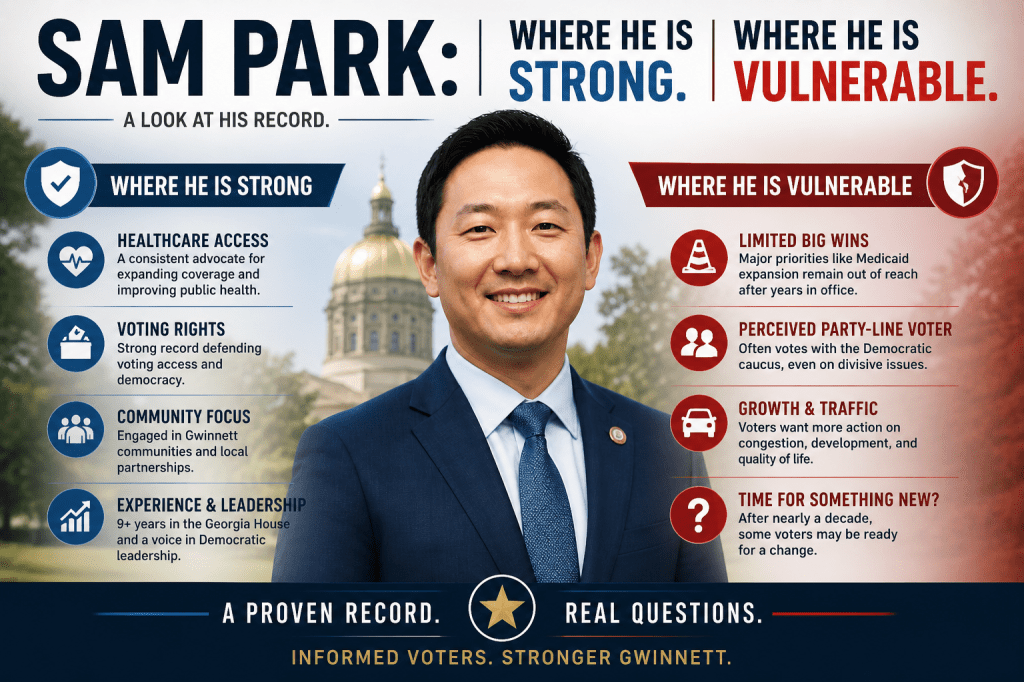
Sam Park has something most politicians would love to have: a long, consistent record.
That’s an advantage.
But in politics, a long record also means something else—you’ve got more surface area to question.
(more…) -
Key Steps for Berkowitz to Compete Effectively in Gwinnett
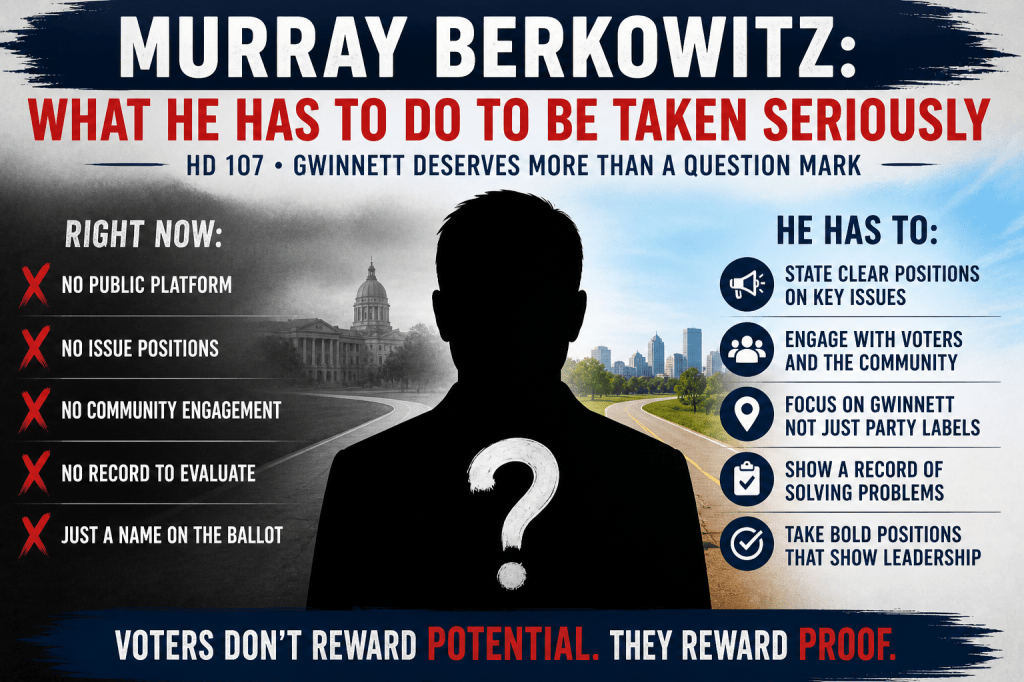
There’s still time for Murray Berkowitz to turn this into a real race.
But time alone won’t do it.
Right now, he’s not competing with Sam Park. He’s competing with a blank space—and voters don’t reward blank spaces.
(more…) -
Gwinnett House District 107: Park vs. Berkowitz Unpacked
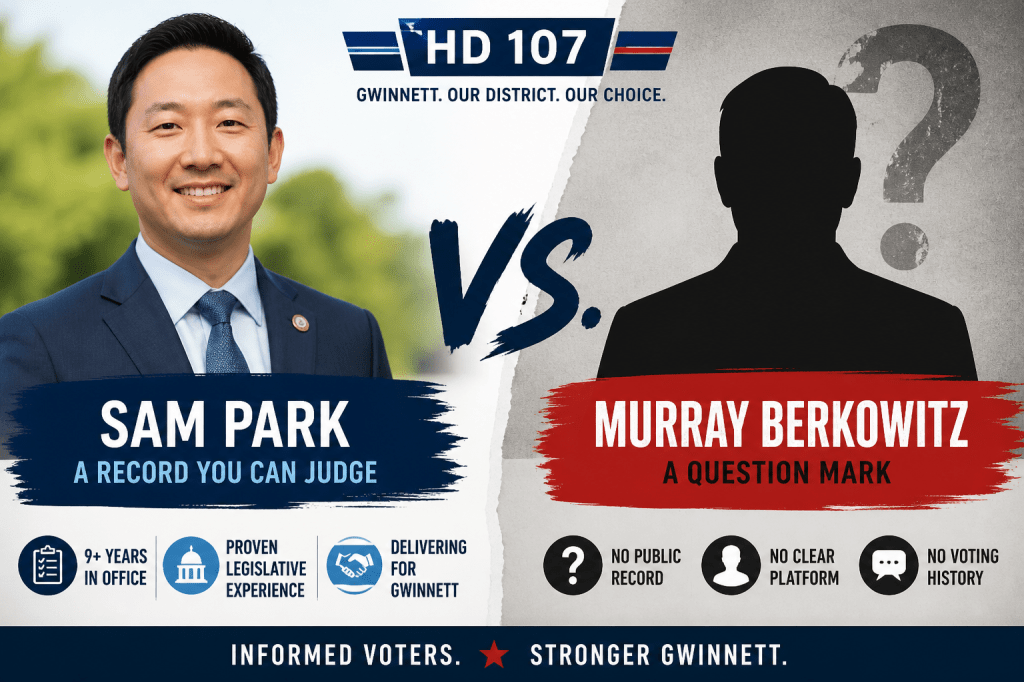
Gwinnett voters in House District 107 have an unusual situation this cycle.
On one side, you’ve got Sam Park—a sitting legislator who’s been in office since 2017. On the other side, you’ve got Murray Berkowitz—a name on the ballot that, so far, hasn’t given voters much to work with.
That’s not a knock. It’s just the reality of what’s in front of us.
(more…) -
How to Create a Political Scorecard That Works for You
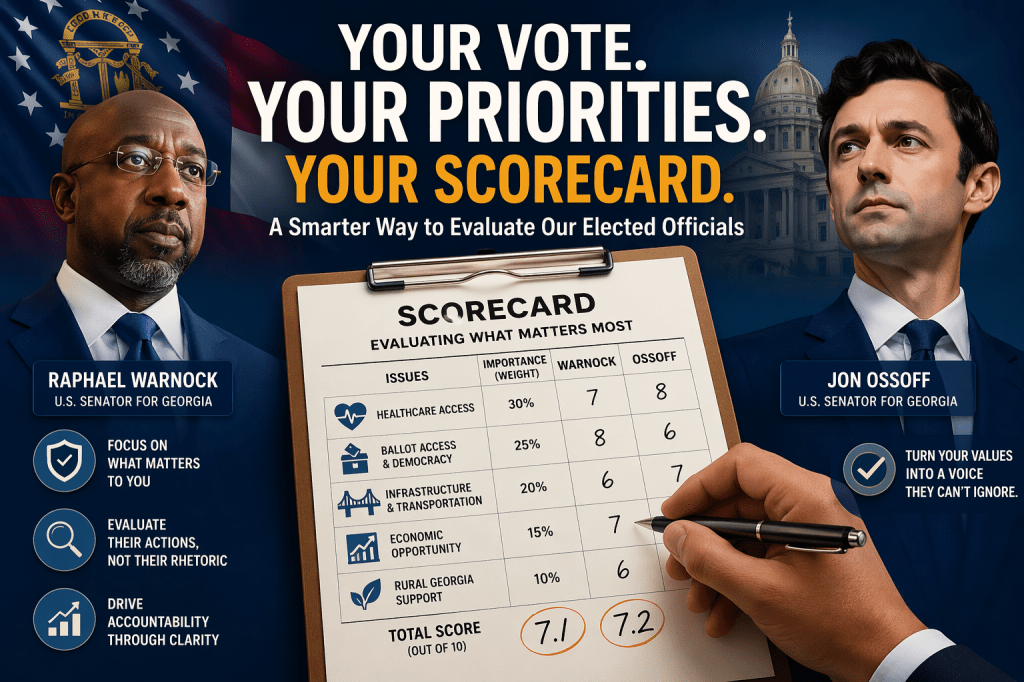
What if evaluating our elected officials didn’t have to feel like guesswork? Too often, voters rely on party labels, campaign slogans, or a handful of headline issues to decide who deserves their support. But there’s a better way—one that puts you, the voter, firmly in control. A personalized political scorecard can transform how you evaluate leaders like Raphael Warnock’s colleague Jon Ossoff and others who represent you.
The idea is simple: instead of asking whether a politician is “good” or “bad,” you define what matters most in your daily life and assign weight to those priorities. Then, you score elected officials based on how well their actions align with your values—not someone else’s talking points.
This approach cuts through the noise. It forces clarity. And most importantly, it turns passive voters into active evaluators of performance.
(more…) -
Gun Violence: If We’re Serious, We Need to Stop Treating It Like One Problem

There’s a habit in this country that gets us in trouble over and over again—we take a complicated problem, flatten it into one thing, and then argue about one big solution like it’s going to fix everything.
Gun violence is a perfect example.
If you listen to the debate long enough, you’d think it’s all one issue. It’s not. It’s three very different problems wearing the same label—and if we don’t separate them, we’re just talking past each other.
(more…) -
Georgia House District 107: A Race That Tells You More About the District Than the Candidates
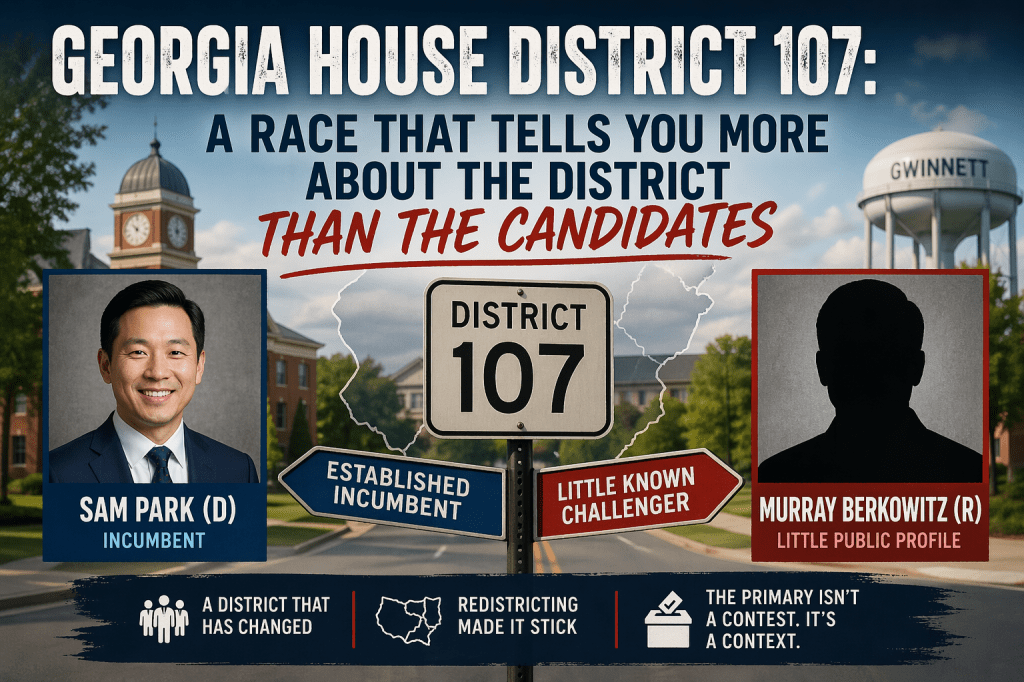
If you pull up your ballot for Georgia House District 107 this year, you’ll see two names—one Democrat, one Republican. That’s usually a sign of a contest.
In this case, it’s more of a formality.
Now that’s not a knock on anybody. It’s just the reality of where this district sits in 2026. And if you want to understand this race, you’ve got to look past the names and take a hard look at the ground they’re standing on.
Who’s on the ballot
On the Democratic side, you’ve got the incumbent, Sam Park. He flipped this seat back in 2016 and hasn’t looked back since. These days he’s part of House Democratic leadership, which tells you he’s not just holding the seat—he’s comfortable in it.
On the Republican side is Murray Berkowitz. And I’ll be straight with you—if you haven’t heard much about him, you’re in good company. I went looking. There’s not much there right now in terms of a public campaign footprint—no website, no clear platform, and not a lot of public engagement.
So yes, there are two names on the ballot. But at the moment, only one of them is really running a visible race.
(more…) -
The Most Powerful Office You’re Probably Not Paying Attention To

Most voters can name their Governor. Some can name their Congressman. Very few can tell you who their judges are—or what they actually do.
That’s a problem, because judges may have more direct impact on your daily life than almost any elected official on your ballot.
And unlike most races, voters often walk into the booth with little more than a name—and maybe a guess.
(more…) -
Understanding Lawrenceville’s Annexation: Impacts on Local Development
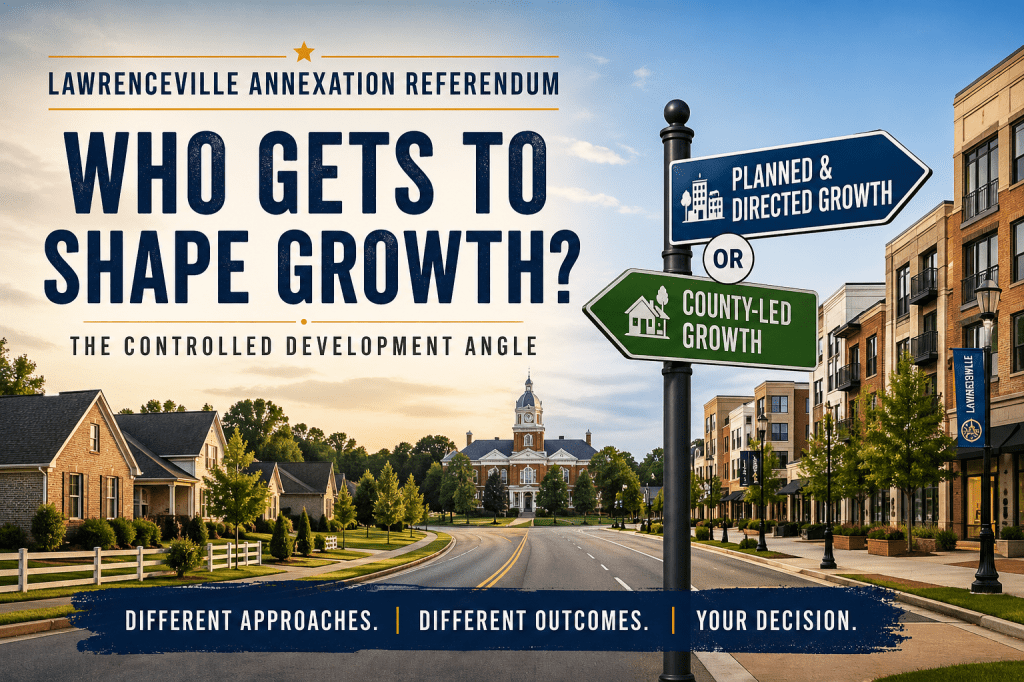
There’s a referendum coming up in Lawrenceville that hasn’t gotten nearly the attention it deserves. On the surface, it’s about moving some lines on a map. In reality, it’s about something much more practical:
Who gets to decide what gets built around you.
That’s the heart of this vote.
What’s Being Decided
Voters in parts of unincorporated Gwinnett County will decide whether their neighborhoods should be annexed into the City of Lawrenceville.
If approved, those areas would shift from county governance to city governance starting in 2027.
That means a different set of decision-makers will be calling the shots on zoning, land use, and development.
(more…) -
Aizaz Shaikh: A Candidate Beginning to Engage in Senate District 7
Georgia State Senate District 7 continues to be one of the more unusual races on my ballot this cycle. Between the special election and the regular primary landing on the same day, there’s already more for voters to sort through than usual.
On the Republican side of the primary, one name stands alone: Aizaz Shaikh.
That makes this race simple on paper—but not necessarily simple for voters trying to understand who they’re sending forward to the general election.
(more…) -
Democratic Candidates in Gwinnett: Who Will Prevail?
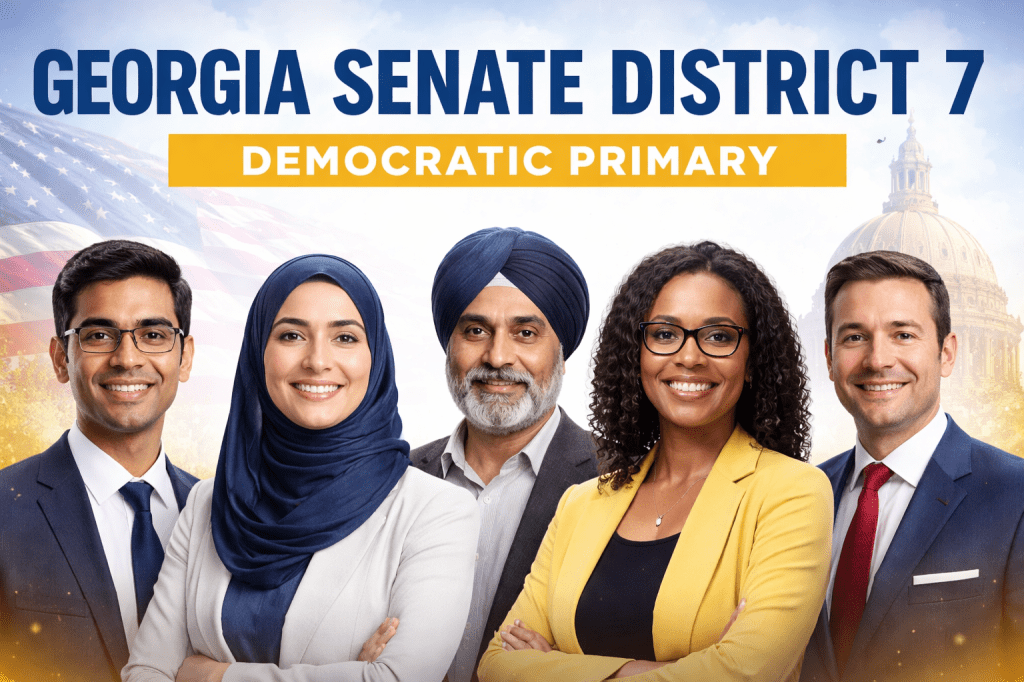
Georgia’s 7th State Senate District isn’t just another race—it’s a test of what Democratic voters in Gwinnett County actually value when the spotlight is dim and the ballot is crowded.
A special election has opened the seat, and with it comes a five-candidate Democratic field. On paper, they share similar party labels and broad priorities. In practice, they offer very different levels of experience, visibility, and proof of performance.
This is the kind of race where campaign speeches matter less than track record, organization, and the ability to actually show up and do the work. In other words—it’s a “walk, not talk” election.
(more…)

Things I think about things I see
[
[
[
]
]
]
 The musings of Larry D Burton