
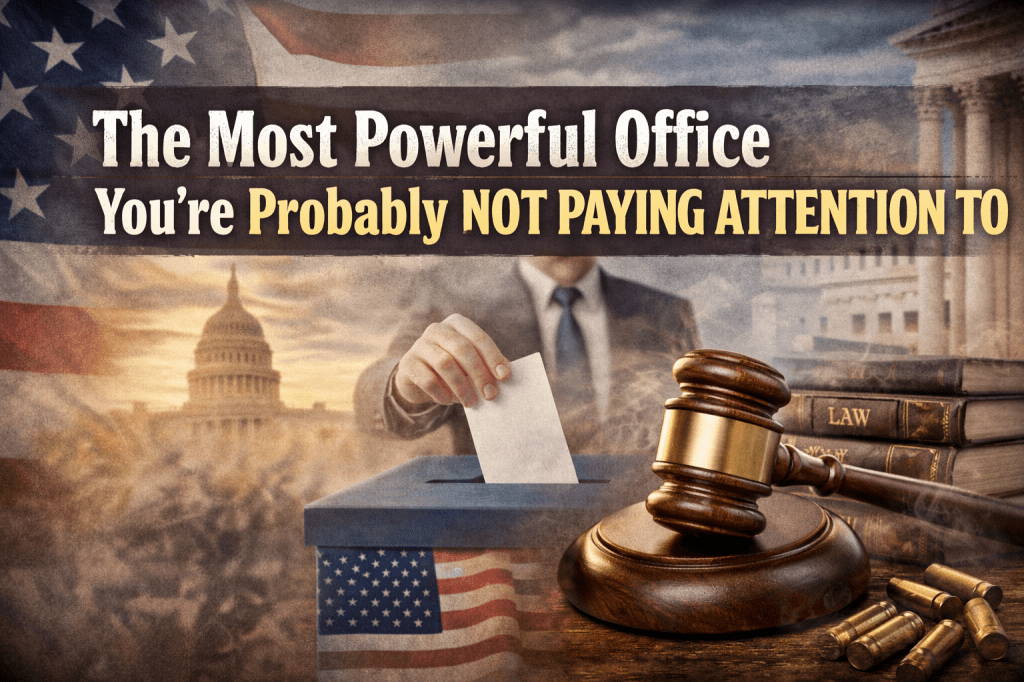
Most voters can name their Governor. Some can name their Congressman. Very few can tell you who their judges are—or what they actually do.
That’s a problem, because judges may have more direct impact on your daily life than almost any elected official on your ballot.
And unlike most races, voters often walk into the booth with little more than a name—and maybe a guess.
What Judges Actually Control
Judges don’t just interpret the law in some abstract way. They make decisions every day that shape real outcomes:
- Bail decisions that determine whether someone goes home or sits in jail
- Sentencing that can vary widely within the same legal guidelines
- Plea agreements that resolve the majority of criminal cases
- Courtroom management that affects fairness, efficiency, and access to justice
Two judges, looking at the same law, can produce very different results based on how they approach their role.
Why These Races Fly Under the Radar
There are a few reasons judicial races don’t get the attention they deserve:
- They tend to be low-profile and less covered by media
- Candidates often avoid strong public positions
- Many voters don’t feel equipped to evaluate legal qualifications
The result is predictable: name recognition, ballot position, and guesswork end up deciding races that deserve much closer scrutiny.
Walk Over Talk Applies Here Too
I’ve said before that I pay more attention to how candidates walk than how they talk. That’s even more important with judges, because they don’t do much talking in campaigns to begin with.
If you want to understand a judicial candidate, don’t focus on campaign language. Look at:
- Their track record in the courtroom
- How they’ve handled cases and managed proceedings
- Their professional reputation among attorneys and peers
- Whether they show consistency, fairness, and discipline in their work
That’s where you find out how they’ll actually perform on the bench.
Why It Matters More Than You Think
Judges often serve long terms. Many run unopposed. Once they’re on the bench, they can shape outcomes for years with relatively little public visibility.
This is one of the few places in our system where voter attention is low but impact is high. That’s not a great combination.
If we care about fairness, consistency, and how the law is applied—not just how it’s written—then these races deserve more attention than they get.
What to Watch
- Whether candidates have a demonstrated record—not just a résumé
- How they’ve handled discretion in past roles
- Whether they bring stability or unpredictability to the bench
- If voters are given meaningful information—or left to guess
Final Thought
You may not hear much from judicial candidates. That’s the nature of the job.
But that doesn’t mean these races don’t matter. It means you have to look a little deeper.
Because when it comes to judges, how they walk isn’t just important—it’s everything.


Leave a Reply